

IT Circularity in the Philippines: the Framework, the SDGs, and You
Redefining the Lifecycle of Tech
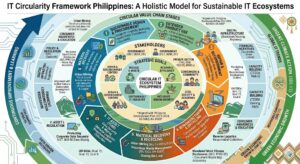
When designing a new IT circularity framework, Philippines business leaders must stop using the outdated linear economy model immediately. For decades, the global IT industry operated on a strictly linear system. We extract rare earth minerals from the ground constantly. Factories manufacture devices using massive amounts of energy. Consumers waste these electronics after just three years of use. This linear model damages the planet severely. Consequently, corporate executives must rethink their entire hardware lifecycle strategy. We must shift toward sustainable, long-term asset management.
Breaking the Linear E-Waste Model
Circularity completely disrupts this traditional “take-make-waste” supply chain. This modern framework decouples economic growth from resource consumption. It ensures IT assets remain at their highest utility always. You extend the productive life of every corporate laptop. Your IT department stops buying brand new equipment unnecessarily. Instead, you deploy certified refurbished hardware across your office. Therefore, your company reduces its overall environmental footprint drastically. This shift represents a massive operational advantage for local businesses.
The Strategic Link to the SDGs
To build a compliant IT circularity framework, Philippines regulators recommend linking your strategy to the United Nations Sustainable Development Goals. These goals guide corporate responsibility programs worldwide. Circular economy strategies contribute significantly to several specific global targets. Responsible management of e-waste is absolutely essential today. Philippine enterprises must align their operations with these international benchmarks. Investors look closely at these specific alignments during corporate audits. Therefore, understanding this vital connection improves modern corporate governance.
Supporting Responsible Consumption (SDG 12)
Goal 12 focuses heavily on responsible consumption and production. Extending hardware life directly fulfills this specific global mandate. Companies reduce their constant demand for new raw materials. We minimize the toxic output of the electronics manufacturing industry. Your business stops throwing away functional technology prematurely. Instead, you embrace professional refurbishment and component harvesting. This action keeps valuable metals circulating within the active economy. Consequently, you stop contributing to expanding local landfills.
Driving Global Climate Action (SDG 13)
Goal 13 demands urgent action to combat climate change. Manufacturing a single laptop generates massive greenhouse gas emissions. The production phase accounts for eighty percent of its carbon footprint. Choosing second-life assets lowers your corporate Scope 3 emissions drastically. You avoid the massive carbon cost of manufacturing brand new devices. Furthermore, responsible recycling prevents toxic gases from escaping dumpsites. Your enterprise actively fights global warming through smart procurement. This proactive approach strengthens your public environmental pledges.
Creating Green Economic Growth (SDG 8)
Goal 8 promotes sustained, inclusive, and sustainable economic growth. Supporting the formal ITAD sector creates high-skilled green jobs locally. The Philippines struggles with a massive informal e-waste processing sector. Informal scrap buyers use dangerous, toxic methods to extract metals. Partnering with certified processors moves workers into safe environments. Your business decisions directly support decent work standards nationwide. Thus, circularity builds a stronger, safer local economy for everyone.
The New Vocabulary of Reporting
The government now mandates strict climate-related disclosures for listed companies. The SEC enforces the new PFRS S2 reporting standards firmly. Corporate sustainability reporting is no longer a simple public relations exercise. Companies face intense pressure to provide hard, verifiable data. You must document your waste management practices accurately. Vague environmental statements fail modern corporate audits completely. An IT circularity framework philippines framework provides the exact metrics needed. We track units redeployed and materials recovered meticulously.
Mastering PFRS S2 Disclosures
Under PFRS S2, enterprises must account for all Scope 3 emissions. Category 5 specifically covers waste generated in daily operations. Every broken monitor contributes to your official carbon footprint. Outdated servers increase your corporate emissions profile significantly. Retired corporate smartphones add to this growing environmental liability. Auditors demand verified numbers from your IT department annually. They reject simple claims that you recycle office waste responsibly. You need mathematical proof of your environmental stewardship.
Essential Metrics for Your ESG Report
You must capture specific data points for successful ESG reporting. Your certified IT disposal partner must supply these figures automatically.
- Total weight of electronic waste diverted from local landfills.
- Carbon equivalent emissions avoided through successful hardware refurbishment.
- Precise material recovery rates for precious metals like gold.
- Serialized certificates of data destruction for security compliance.
These metrics prove your commitment to sustainable business practices. They provide the mathematical foundation for your annual public disclosures.
Transforming Procurement Strategies
Circularity changes how your finance team views hardware purchasing. Procurement officers must stop insisting on new-in-box equipment exclusively. Forward-thinking Philippine companies buy certified second-life assets instead. These enterprise-grade machines offer the exact same daily performance. A properly refurbished laptop handles standard corporate workloads flawlessly. You acquire this reliable performance at a fraction of the cost. Therefore, your IT budget stretches much further every single quarter.
Tapping into the Urban Mine
E-waste represents a massive, untapped urban mine for businesses. A single ton of circuit boards contains vast amounts of gold. It holds forty times more copper than raw mined ore. Throwing IT equipment into the trash forces destructive physical mining globally. Partnering with a certified ITAD ensures we recover materials safely. We return these precious metals to the active manufacturing supply chain. This strategy reduces our reliance on environmentally destructive earth mining. It creates a closed-loop system for critical technological resources.
The Business Value of Circularity
To implement the most profitable IT circularity framework Philippines has to offer, you must embrace asset recovery. Selling decommissioned servers recovers significant working capital for your team. You avoid paying expensive storage fees for obsolete office equipment. Furthermore, you eliminate the risk of massive government regulatory fines. Compliance with strict environmental laws protects your corporate brand equity. Sustainable businesses attract better investors and higher-quality young talent. In that case, circularity is simply a better way to run your enterprise.
Protecting Corporate Data Securely
Sustainability must never compromise your corporate cybersecurity posture. Circular processes include rigorous data sanitization protocols automatically. Every refurbished laptop undergoes strict NIST 800-88 data wiping. This standard guarantees the permanent destruction of sensitive company files. You can safely reuse or donate hardware without exposing private data. Environmental protection and data security work together seamlessly. Your CISO and your Sustainability Officer share the exact same goals. We protect your planet and your passwords simultaneously.
Protecting the Local Environment
Electronic waste releases terrible toxins into our natural environment. Lead and mercury seep into Philippine soil and water systems. Cadmium from old batteries poisons local agricultural communities severely. Implementing a circular strategy stops this toxic pollution completely. We extract these dangerous materials inside controlled, certified industrial facilities. We ensure nothing hazardous ever reaches a municipal dumpsite. Your corporate choices directly protect local ecosystems and human health. This environmental stewardship builds immense trust with the public.
Building Your Strategy Today
Your organization must start building this circular strategy today. Integrating these practices into your daily operations takes time. You need a trusted partner to navigate this complex transition safely. Humble Sustainability provides the expertise required for this operational shift. We manage your hardware from deployment to final disposition and supply the audit-ready data for your PFRS S2 reports. Also, we generate immediate financial returns from your retired IT assets– making your transition to the circular economy simple.
Lead Your Industry Forward
Do not wait for regulatory auditors to penalize your business. Take proactive control of your corporate electronic waste management now. Align your daily operations with the global Sustainable Development Goals. Additionally, protect your data while protecting our shared natural resources. Lead your industry by adopting a truly sustainable business model. Contact our expert team to schedule a comprehensive ITAD consultation. We will help you build a resilient, green technology infrastructure.
Stop leaving your corporate ESG reporting and environmental compliance to chance. If you are ready to transition your enterprise to a zero-landfill, fully circular IT model, we are ready to help. Fill out the contact form below to schedule a consultation or request a secure hardware assessment with Humble Sustainability today.
Ready to start reporting these metrics? See Your Sustainability Report Needs an IT Disposal Section.